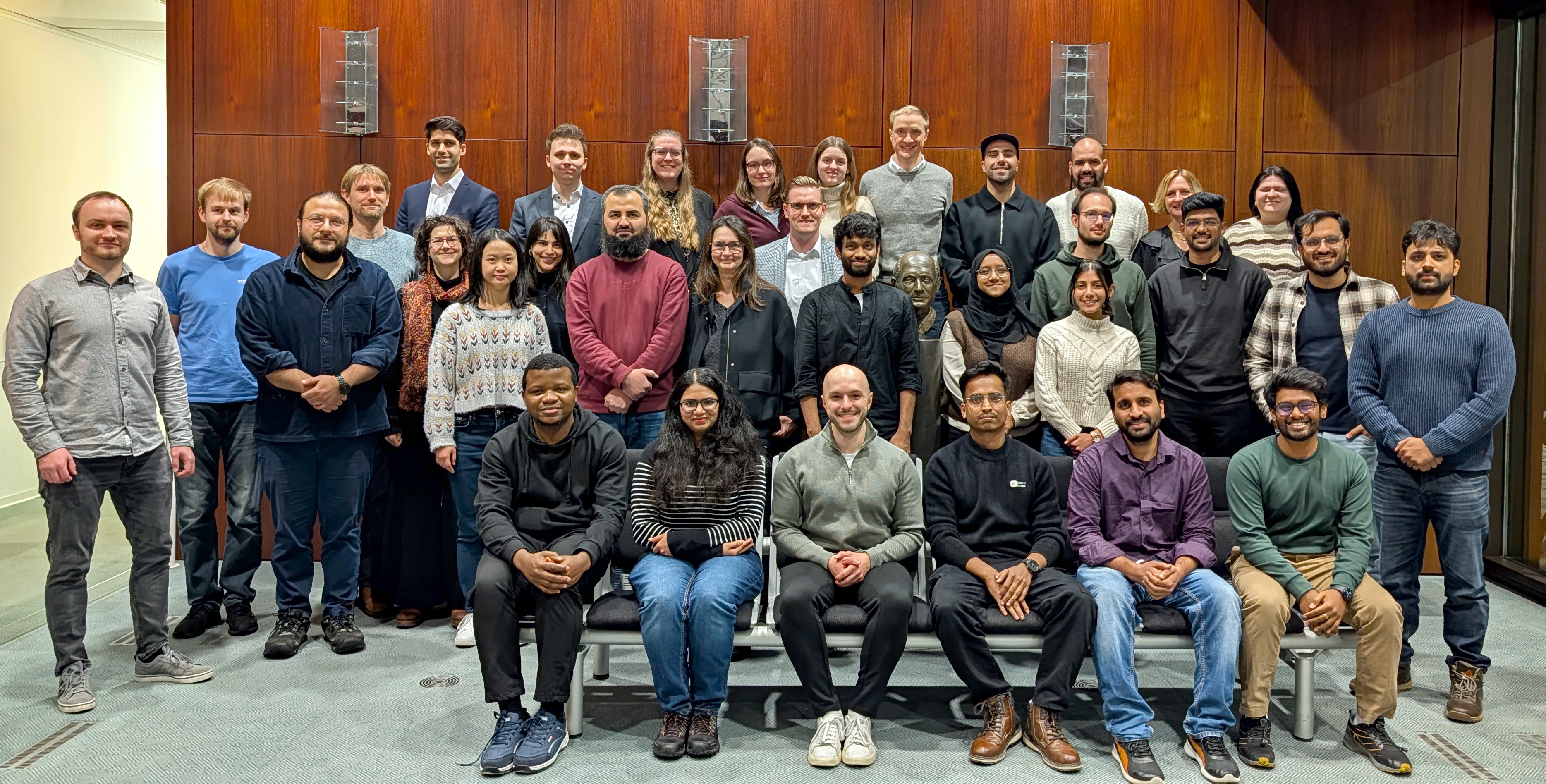
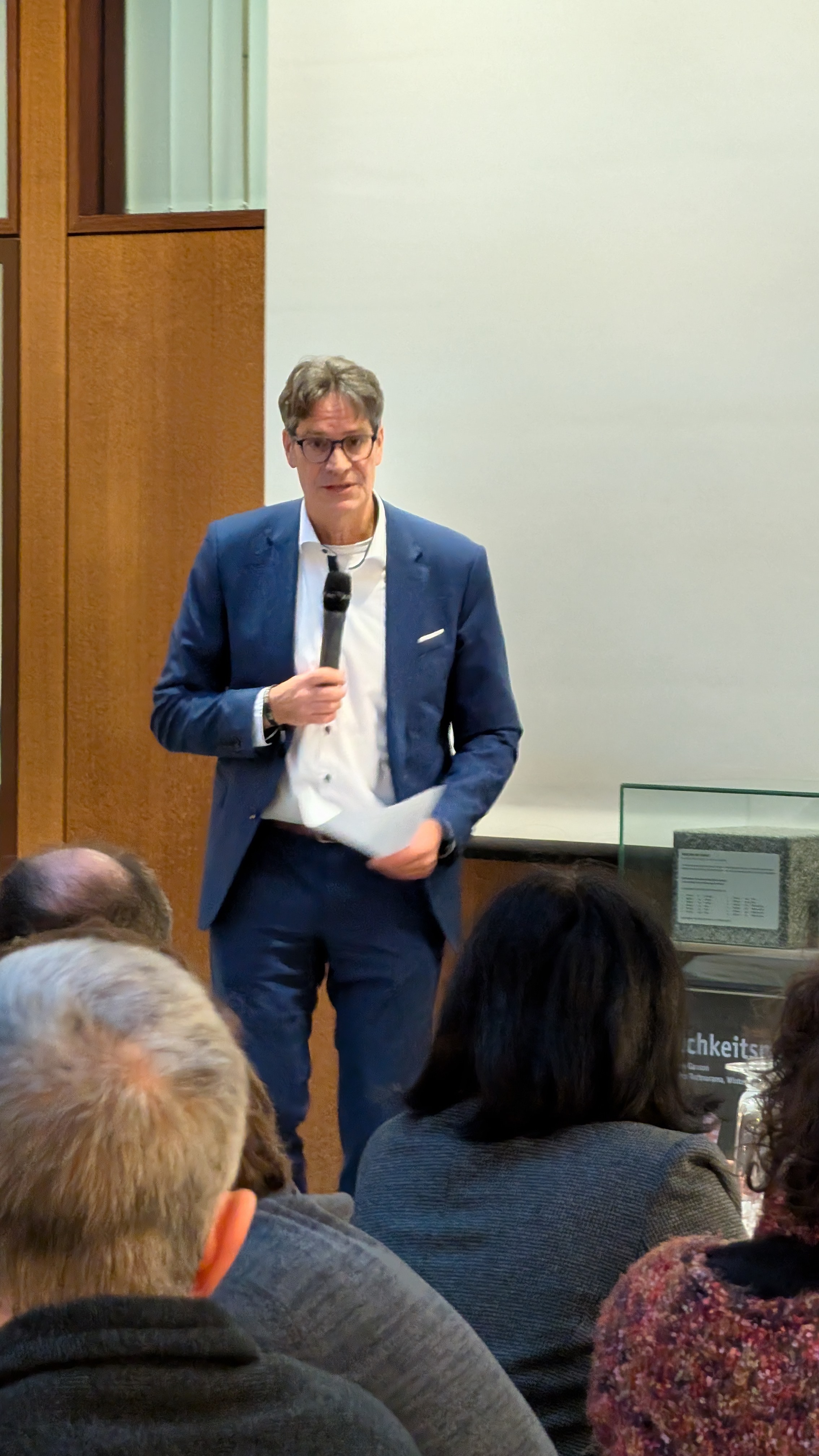
On 27 January, the Executive Board of the Heinz Nixdorf Institute invited our employees to this year's New Year's Dinner and used the occasion to look back on a successful year 2025. With 12 doctorates, 130 publications and 157 Bachelor's, Master's and student research projects, Prof René Fahr, Chairman of the Institute's Executive Board and Head of the "Behavioural Economic Engineering and Responsible Management" department, drew a positive balance from the year 2025. The estimated third-party funding of around 8.5 million euros for 2025 also underlined the successful development of the Institute.
Significant progress was made in the field of projects and events. With the ERC projects "Self-Optimising Static Program Analysis" and "CultCryo" as well as the ongoing DFG Priority Programmes SPP 2111 "Electronic-Photonic Integrated Systems for Ultrafast Signal Processing" and SPP 2443 "Hybrid Decision Support in Product Creation", central future topics were advanced. Structural milestones included the continuation of Prof Suzana Alpsancar's professorship and her confirmation as a full member. In addition, the EEBEO project was supported with funding, which will further strengthen the scientific work of the institute.
Fahr also welcomed the new members of staff and the new "Modelling and Design of Photonic Quantum Systems" workgroup headed by Prof. Dr. Sina Saravi.
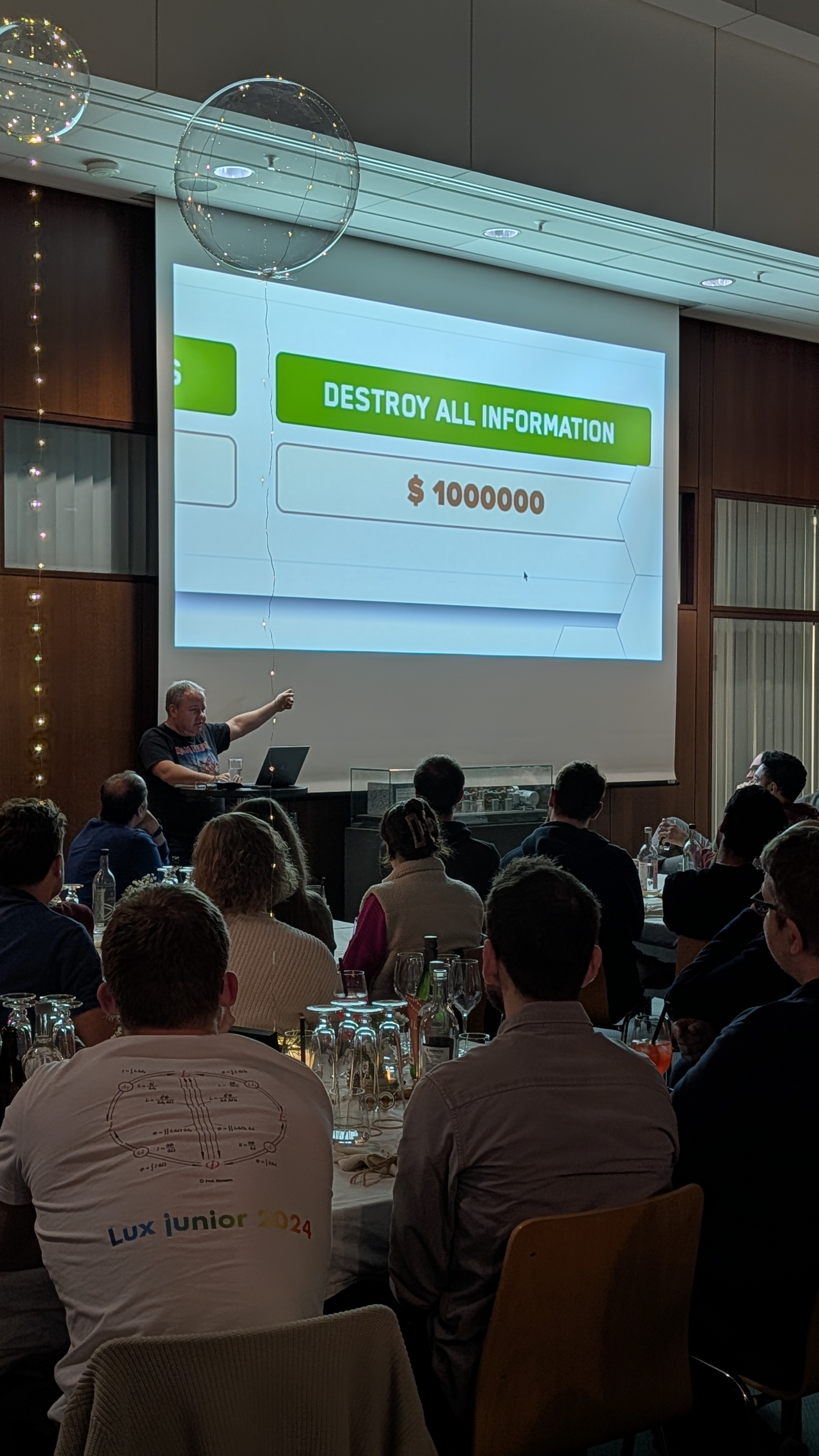
In a humorous presentation, Tobias Schrödel addressed one of the greatest dangers for companies: the threat of cybercrime. He led the audience into the hidden world of ransomware attacks. Using real examples, he showed how cyber criminals first steal sensitive company data, then encrypt it and finally demand a ransom - combined with the threat of making confidential information publicly accessible. The live insights into the darknet were impressive, illustrating how professionally these gangs are organised, the sums of money that are extorted and how many companies are currently affected. Schrödel also explained the common methods of attack and outlined specific measures that companies can use to better protect themselves.
Looking forward to 2026, Fahr thanked all guests for their participation in the ongoing success.