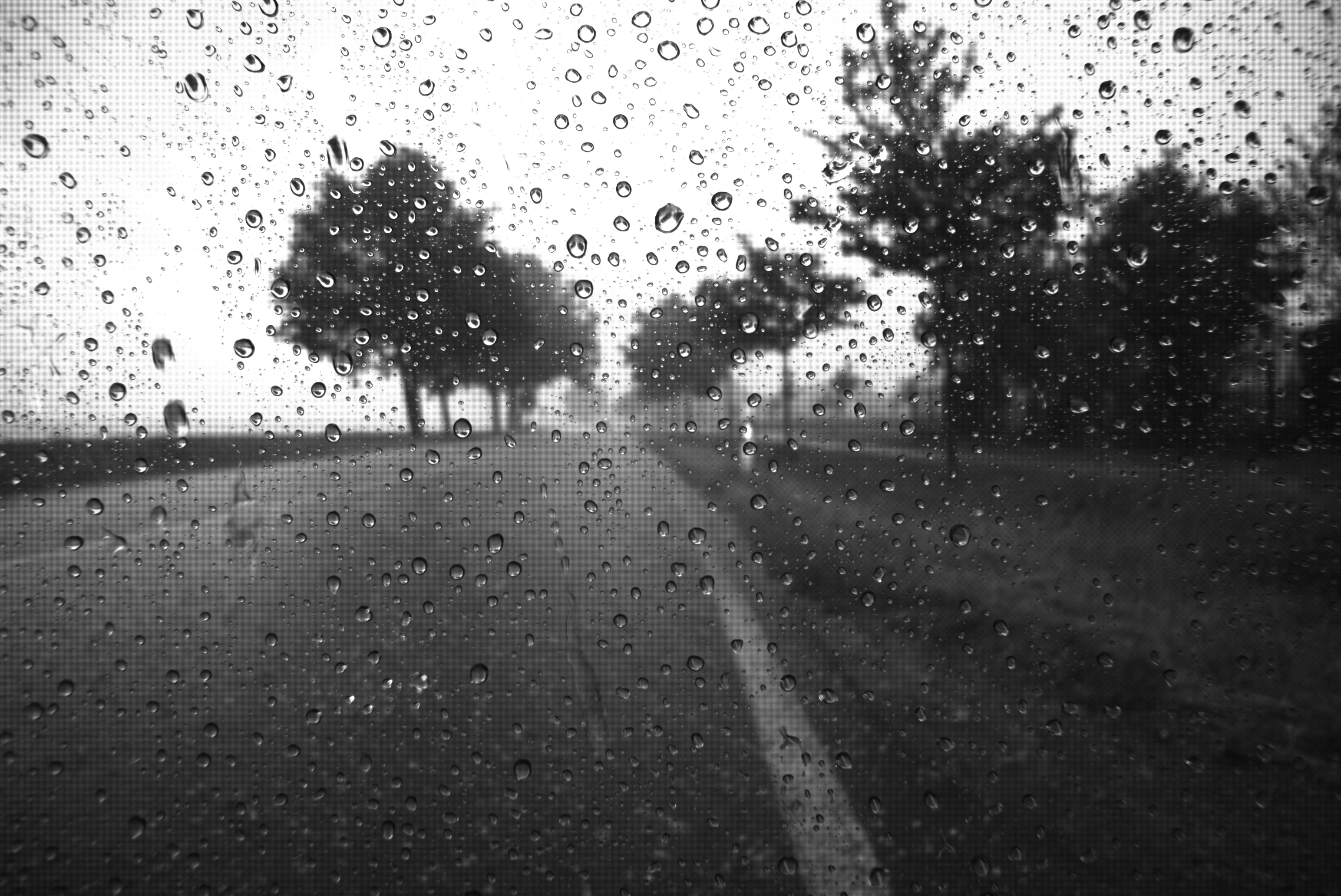
"Robustness of sensors and sensor systems against environmental conditions for highly automated driving" (Rosshaf): In the Rosshaf project, our "Control Technology and Mechatronics" workgroup tested common sensor types for the environmental monitoring of self-driving vehicles. These were analysed both in reality and simulatively for their robustness under bad weather conditions. The aim was to derive possible measures to increase robustness.
Automated driver assistance systems are on the advance in everyday life and already represent the state of the art up to SAE level 3. SAE Level 3 refers to conditional automation in which the vehicle can take over the driving task completely under certain conditions, allowing the driver to perform non-driving tasks. However, the driver must be ready to take back control at any time as soon as the system requests this, e.g. when approaching system limits or in the event of irregularities. For highly automated driving from SAE level 4, the environment sensors must also function without restriction in bad weather conditions.
Our "Control Engineering and Mechatronics" workgroup developed a simulation environment for this purpose, which is used to map LIDAR and camera sensors. The sensors mapped in the simulation and the environment are modelled in a physically motivated way. The sensors are integrated into the simulation environment in the form of mathematical models and ray tracing algorithms. In addition to the sensor models, the simulation environment also contains a virtual scene consisting of 3D models. Based on this approach, the weather conditions that are critical for the sensors can be simulated and analysed using the virtual measurement data generated.
Together with the ultrasonic and radar sensor simulation of the project partner dSpace , a simulation framework was created in the project that allows the most relevant sensors for the environmental monitoring of highly automated vehicles to be considered in combination.
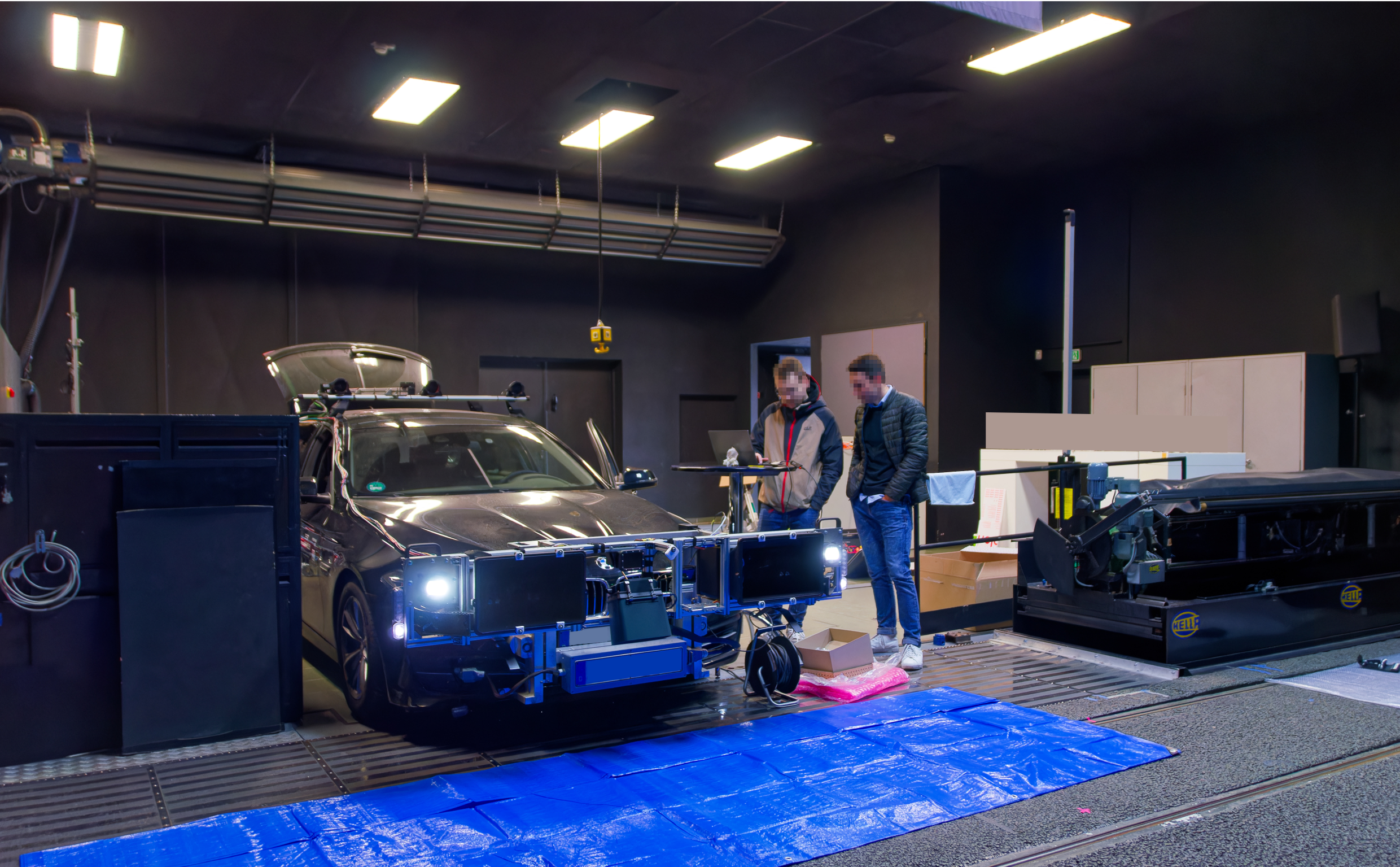
In addition, measurement data was collected with real sensors. For this purpose, a real test vehicle was built by the project partner Hella . This is equipped with camera, LiDAR, radar and ultrasonic sensors and collects valuable measurement data through test drives in the region around Paderborn under bad weather conditions. The company RTB, another project partner, is also setting up fixed measuring stations. The measurement data collected can be used to validate the sensor simulation and validate all work based on it.
Suitable analysis tools can be used to derive possible measures to increase the robustness of individual sensors and entire sensor networks. These include, for example, repositioning the sensors on the vehicle, introducing redundant sensors or supporting the sensors with the vehicle's own actuators (e.g. headlights). The possible measures can then be integrated into the development process and ensure that SAE levels 4 and 5 can be achieved in the future in terms of sensor technology.